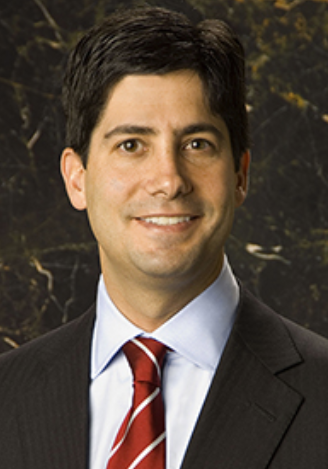
President Trump didn’t pick Kevin Warsh to be another rubber-stamp inflation enabler at the Federal Reserve. He installed a battle-tested operator who knows exactly how the central bank has wandered into political meddling and economic sabotage. Warsh, sworn in just days ago on May 22, 2026, replaces Jerome Powell at a moment when real inflation pressures are testing the system again. This isn’t some academic experiment. It’s a course correction for an institution that spent years punishing American workers with easy money, asset bubbles, and zero accountability.
Kevin Warsh has been sworn in as the 17th Chairman of the Federal Reserve. 🇺🇸 pic.twitter.com/0gIOh1dUss
— The White House (@WhiteHouse) May 23, 2026
From Wall Street to the Fed Governor’s Chair—And Back
Warsh isn’t some career bureaucrat who spent decades sucking up in Washington. Born in 1970, he earned degrees from Stanford and Harvard Law, then cut his teeth at Morgan Stanley in mergers and acquisitions. By his early 30s, he was already in the White House under George W. Bush, serving as special assistant for economic policy and executive secretary of the National Economic Council. In 2006, at age 35, he became the youngest Fed governor ever appointed.
During the 2008 financial crisis, Warsh was in the room helping navigate the bailouts, Bear Stearns deal, and AIG mess. He earned a reputation as a hawk—pushing back against overly loose policy and warning that flooding the system with cash would breed future trouble. He resigned in 2011, later landing at Stanford’s Hoover Institution, where he sharpened his critiques of Fed overreach, mission creep, and failure to stick to basics like price stability.
His personal fortune—built through smart investments, including stakes in tech and emerging companies—tops nine figures. That independence from the usual D.C. grift machine matters. He’s not there to protect the club.
Warsh’s Core Views: Price Stability First, No More Excuses
Warsh has been crystal clear for years: inflation isn’t some mysterious force from the gods. It’s a policy choice born from excessive government spending and the Fed printing too much money to finance it. He rejects the parade of excuses—supply chains, pandemics, whatever—that central bankers used to dodge responsibility when prices spiked under the previous administration.
He believes the Fed’s dual mandate of price stability and maximum employment should stay focused and narrow. No more wandering into climate crusades, equity experiments, or social engineering. Monetary policy should support productive growth without creating bubbles that crush Main Street when they pop. In recent years, he’s sounded more open to lower rates when backed by real productivity gains—like the AI wave he calls structurally disinflationary.
This aligns squarely with America First priorities. Warsh sees the Fed operating with independence but not isolation from elected leaders’ goals of strong growth, energy dominance, and secure borders that actually deliver cheap goods and stable prices for working families. He’s called for reform: clearer communication, better accountability, and escaping rigid models that failed during past crises.
What He’ll Actually Do as Chair
Warsh took the oath promising a “reform-oriented” Fed pursued with “independence and resolve.” Expect him to hammer price stability as job one—no equivocation. With inflation ticking up from global pressures and energy costs, he’ll balance Trump’s push for growth-friendly rates against the need to avoid reigniting the fire.
He’ll likely shrink the Fed’s bloated balance sheet over time, dial back the endless bond-buying addiction, and refocus on core functions instead of playing global liquidity sugar daddy. Productivity-enhancing policies from the Trump agenda—deregulation, energy production, tax restraint—give him room to keep policy supportive without repeating past mistakes.
Markets reacted positively to his swearing-in, sensing a steadier hand that won’t sabotage the recovery. He’s no sock puppet, but he’s also no enemy of the agenda that won in 2024. Warsh knows financial stability crumbles without price stability, and American families can’t thrive under constant cost-of-living assaults.
The Bigger Shift America Needed
For too long, the Fed acted like an unaccountable fourth branch, picking winners on Wall Street while ignoring the pain in flyover country. Warsh’s arrival signals the end of that era. A guy with real-world experience, crisis scars, and a track record of calling out nonsense is now in charge. He won’t deliver instant miracles—economics doesn’t work that way—but he’ll stop the ideological experiments and refocus on what actually delivers prosperity: sound money, predictable policy, and support for productive America.
Democrats and the usual suspects are already clutching pearls about “threats to independence.” Translation: they liked the old setup where the Fed helped fund their spending sprees and cushioned bad progressive ideas. Voters rejected that in 2024. Warsh gets it. With Trump setting the direction on trade, energy, and regulation, a Fed that stays in its lane and does its real job will help deliver the strong, resilient economy Americans voted for.
This is how you fix institutions that forgot who they serve. No more excuses. No more sabotage. Just results.